Kekstäschchen 2012

Christmas Treat Bag 2012

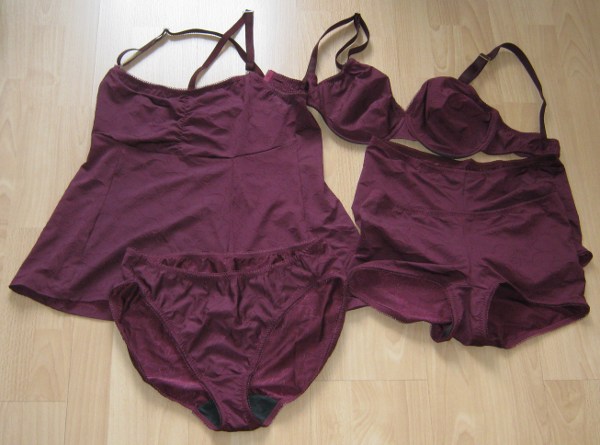
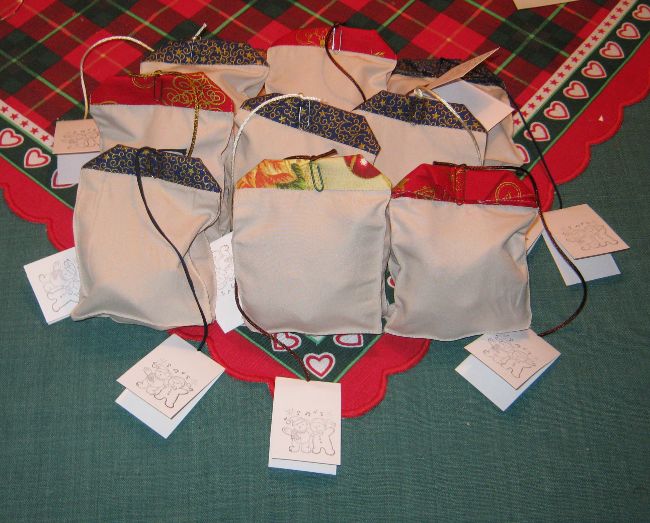
KekstäschchenUnd das ist die diesjährige Parade meiner Keks-Verschenke-Täschchen… zumindest ein Teil davon. (Die will ich ja auch noch zeigen, bevor die Weihnachtssaison vorbei ist. 😉 )

These are some of my edition of 2012s treat bags.(So I can show them before Christmas Season is completely over. 😉 )

Ich habe versucht, die Form eines Teebeutels zu imitieren, war nicht ganz einfach, kam aber ganz gut an. Ob wegen der Form oder wegen dem Inhalt weiß ich nicht genau. 😉

I tried to give them a tea-bag shape. Was not so easy, but so far everyone liked them. Not sure if they do this for the shape of the bag or because of the cookies inside… 😉

Krinkel-Stern-Karten, Teil 3

Crash-Star-Cards, part 3
etwas gecrashte KarteWas jetzt passiert ist, daß das Soluvlies sich unter dem Dampf anfängt zusammen zu ziehen.

What happens now is that the Soluvlies starts to retract under the hot steam.

Und man bekommt einen leichten Krinkel-Effekt.

So the fabric starts to crincle.

gekrinkelter SternJa und dann bewegt man das dampfende Bügeleisen einfach so lange über dem Stoff, bis einem der Effekt gefällt.

And then you move your steaming iron over the fabric until you like the effect.

gekrinkelter SternAchtung, wenn es zu viel ist, kann man den Effekt nicht mehr rückgängig machen!

Be carefull, if you steam to much there is no way to „undo“ the effect!

Zur Illustration zeige ich es auch noch mal auf weißer Seide, die photographiert sich plastischer.

As a second example I show the same on white silk, here the effect stands out better on the picture.

fertige KartenDanach muß man die Stoffstücke nur passend zuschneiden und in eine fertige Passepartout Karte kleben.

Then you cut your fabric and glue it into a passepartout card.

Je nach Stoff und Garn sind die Effekte sehr unterschiedlich. Der rote Stoff war übrigens ein leichter Wollstoff, den ich mal bei Bornstein-Stoffe bestellt hatte. (Ja, die gibt es nicht mehr. Ja, das war lange her. Der Rest des Stoffes war ein Kleid.)

Depending on fabric and yarn the effect turns out differently. The red fabric was a lightweight wool I’d ordered long ago from Bornstein-Stoffe. („Long“ means the company is out of business for quite a while. The rest of the fabric became a dress.)

WeihnachtskartenZum Abschluß noch ein paar andere Beispiele, wie die Karten aussehen können. Die beiden links sind aus dem Rest eines Ikatsaris aus Indien, der rechts aus einem afrikanischen Batikstoff. Diesmal mit silbernem Stickgarn von Alterfil gestickt.

Here some more examples how different cards can look. The two on the left were made from Indian ikat sari fabric, the right one is an african batik. Embroidery was silver thread from Alterfil.

Falls ihr euch davon anregen laßt, selber Karten zu machen, erzählt mir davon oder zeigt sie mir!

If that inspires you to make your own cards then please let me know or show me!

Krinkel-Stern-Karten, Teil 2

Crash-Star-Cards, part 2

Zickzackstich
Jetzt wird die Kontur des Sterns mit einem schmalen Zickzackstich abgenäht. Dabei nähe ich genau über die vorherige Naht. Der Zickzackstich sollte zwar eng sein, also eine kurze Stichlänge haben, aber keine ganz geschlossene Raupe. Hier habe ich Madeire Stickgarn in Kupfer benutzt, weil ich das noch hatte. Metallic sieht jedenfalls gut aus dafür.

Now I am oversewing the stitches from the right side of the fabric with a narrow zigzag stitch. The stitchlength should be short, but not as dense as you would normally choose for an appilque or a button hole. Metallic embroidery thread looks usually nice, here I choose some copper embroidery thread from Madeira I still had in my stash from another project.

Kontur nähenJetzt benutze ich meine Zickzackkontur um füßchenbreit daneben einemal mit Steppstich herumzunähen. Auch hier gilt, daß die Stichlänge nicht zu kurz sein sollte.

Now I am using the outline as a guide for another round of stitching, here with a straight stitch. Again the stitch length should not be too short.

Kontur im ZickzackstichDie nächste Runde wird dann noch mal mit Zickzackstich genäht.

Next round is a zig zag stitch again.

Danach nähte man immer im Steppstich in Runden um den Stern herum und folgt der Kontur des Sterns. Bis sozusagen kein Stoff mehr da ist.

Afterwards you continue in rounds around the star with straight stitch only. Always following its contours. Until you run out of fabric.

Stern in Runden genähtSo sieht das ganze dann aus, wenn man fertig ist.

That’s the way it looks after you’re finished.

In die Mitte habe ich noch einen Stern aus sich kreuzenden Linien genäht.

In the middle I’ve sewn crossing lines that also mimics a star.

kräftig dampfenJetzt kommt das Bügeleisen zum Einsatz. Sehr kräftig dampfen, aber dabei den Stoff nicht berühren…

Now it’s all up to the iron. Steam as much as possible, but don’t touch the fabric with the sole of the iron…

So… jetzt könnt ihr entweder selber ausprobieren was passiert oder ihr müßte warten, bis ich Zeit für den dritten Teil habe. 😉

Now you can either try yourself what happens… or you wait until I have the time to write part 3 of the story. 😉

Krinkel-Stern-Karten, Teil 1

Crash-Star-Cards, part 1

Da ich auf meinem Rechner gerade die Bilder gefunden habe, zeige ich jetzt mal eine weitere Möglichkeit, aus Stoffresten Weihnachtskarten zu basteln. Diesmal braucht man außer Stoffresten: einen Bleistift, Vlieseline Soluvlies, Sprühzeitkleber, bevorzugt Maschinenstickgarn (Nähgarn geht technisch auch, aber Stickgarn sieht besser aus) sowie ein Bügeleisen mit viel Dampf.

I just recovered some pictures on my computer so I’ll show you another possibility to transform random fabric scraps into Christmas Cards. Apart from the fabric scraps you need: a pen, Vlieseline Soluvlies (In some countries the products are sold unter the brand name „Pellon“, it might be „Wash N Gone“ but I can’t tell for sure from the website. It’s a non woven water soluble stabiliser. If you can’t get „Soluvlies“ please test first, if the desired reaction happens!), temporary spray adhesive, machine embroidery thread if possible (sewing thread works also, but embroidery thread looks nicer) and a steam iron that steams well.

Vorzeichnung auf SoluvliesZunächst schneidet man ein Stück Soluvlies zu. Es sollte deutlich größer sein, als die Karte später. Besonders gerade muß man nicht schneiden, am Ende wird ohnehin alles begradigt. Darauf zeichnen wir ungefähr in die Mitte mit Bleistift einen Stern. Man kann sich eine Schablone für gleichmäßige Sterne machen oder frei Hand zeichnen.

You cut a piece of Soluvlies a good deal bigger than the intended card. You don’t need to take care for cutting straight, we will cut back in the end. Then you take the pencil and draw the outlines of a star in the middle. If you like a regular shape you can use a stencil or you just draw it as you feel, irregular looks often more dynamic.

Vorbereitung zum KlebenDanach bedeckt man seine Arbeitsfläche gut mit Papier, legt das Soluvlies mit der unbemalten Seite nach oben drauf und verpaßt ihm einen leichten (!) Sprühstoß aus dem Sprühzeitfixierer. (Keinen dauerhaften Sprühkleber, sondern solchen, dessen Klebewirkung nach einiger Zeit von selber verfliegt!)

Then cover your working environment well with paper, put the piece of Soluvlies in the middle, the side with the drawing on is facing downwards. Now give it a light spray from your temporary spray adhesive. (And make sur it is a temporary one, not real glue!)

aufgeklebtDann braucht man Stoffstücke, die etwas größer als die Soluvlies Stücke sein sollten. Da klebt man die vorbereiteten Soluvlies Stücke auf die linke Stoffseite.

Now you need some fabric scraps that are a bit bigger than your pieces of Soluvlies und you adhere the Soluvlies to the left side of the fabric.

Danach kommt die Maschine dran, Stickgarn für den Oberfaden ist schöner und mit Sticknadeln läuft es auch besser. Im Unterfaden kann man hingegen auch Nähgarn nehmen, da ist es egal.

The thread your sewing machine with machine embroidery yarn and if you have take an embroidery needle. For the bobbing you can take any sewing thread, it doesn’t matter there.

Stern markierenDanach näht man die Kontur des Sterns erst mal von der Seite mit dem Vlies her ab. Dabei eher lange Stiche nehmen, aber trotzdem die Ecken genau treffen. Also ggf. vor den Ecken die Stichlänge wieder etwas reduzieren.

Now choose a longer straigh stitch and sew the contours of your star from the side with the Soluvlies. To make sure to match the edges exactely reduce the stitch lenght when approaching the the „turning points“.

MarkiertWenn man die Stoffstücke jetzt umdreht, ist der Umriß auf der rechten Seite gut sichtbar. (Einmal auf ein Bild klicken bringt übrigens eine größere Version…)

Now turn your fabric. The star is well visible on the right side of the fabric. (Clicking on a picture shows you a bigger version…)

Und sobald ich wieder Zeit habe, geht es weiter… 😉

And as soon I have the time to continue writing, I’ll show you how to proceed… 😉

Wider die geplante Obsoleszenz

Against obsolescence

Die Hersteller allerlei Konsumgüter lassen sich ja immer was einfallen, damit wir Sachen wegwerfen müssen, die eigentlich noch fast gut sind. Aber nicht mit mir!

Producers often try to construct their articles in a way that we have to throw them away even though they are mostly good. But I am not willing to play that game!

TascheHier haben wir eine Tasche, die erst einige Jahre alt ist und die mein Mann nur selten nutzt. Sie sieht eigentlich noch ganz gut aus.

Und ist das weitgehend auch noch.

Here is a purse that is only some years old and that is only rarley used by DH. All in all it looks still fine.

And also is mostly fine.

GurtpolsterBis man die Polsterung des Gurtes anschaut. Von der löst sich da was ekliges.

Until you look the padding of the strap, there is some stuff coming off.

Das an sich wäre auch nicht schlimm, ohne das geht es eigentlich gut. Nur… das Zeug was abgeht, das hinterläßt üble Flecken auf der Kleidung. Die teilweise selbst die Waschmaschine überlebt. (Was allerdings erst auffällt, seit mein Mann nicht nur eine schwarze, sondern auch eine helle Jacke hat. 🙂 )

That would not be a big problem, because whatever it is you don’t really need it. Only… the residue that comes off leaves very ugly black spots on the clothes. That kind that does not completely come off in the washing machine. (Which we only noticed when DH had not only black jackets but also a beige one. 🙂 )

InterlockAlso nehme ich einen Rest schwarzen Interlocks. Der wir so breit zugeschnitten wie der Umfang des Polsters und zwei Zentimeter länger. Dann wird eine Längsseite etwa einen Zentimeter auf die linke Seite umgebügelt.

I took a piece of cotton interlock, cutting a rectangle that is 2cm longer than the length of the padding and as wide as the circumference of the padding. Then I am folding one long side a scant centimeter to the left side of the fabric.

Dann lege ich mein Stoffstück um den Träger, so daß der gefaltete Rand etwa einen Zentimeter die Schnittkante überlappt. Dadurch wird der Stoff etwas gedehnt und liegt später straff.

Then I am wrapping the fabric around the padding. The folded edge overlaps the cut edge by about one centimeter. So the fabric is a bit stretched and will later lay flat over the padding.

HandnahtDann wird von Hand genäht. Nur durch den Stoff, nicht durch das Polster.

Then some hand stitching. Only through the fabric, not through the padding.

Danach kann man die Naht entweder auf der Unterseite lassen oder an die Kante schieben. Ich habe sie an die Kante geschoben.

After that you can either leave the seam where it is or turn the fabric until the seam is on the edge of the padding. That is what I’ve decided for.

HandsticheDann wird der Stoff an den Schmalseiten etwa einen Zentimeter nach innen eingeschlagen und auch von Hand festgenäht. Hier nähe ich ihn teilweise am Gurt selber fest, damit er sich nicht verzieht.

Then turn a one centimeter hem to the inside of the tube and sew by hand. Here I attached the fabric also to the strap itself so it won’t shift.

Reparierte TascheUnd schon haben wir eine reparierte Tasche, die noch mal sechs Jahre oder so halten kann. 🙂

Now we have the problem fixed. And the bag can be used for another six years or so.

Die Reparatur hat mich kein Material gekostet, weil ich noch Reste hatte und es von Hand zu nähen kostete weniger Mühe, als den Träger abzutrennen, die Abdeckung drüberzuschieben (dann an den Rändern doch von Hand anzunähen…) und den Träger wieder festzunähen.

To fix the problem did not cost me any money because I still had that bit of fabric needed and handsewing took less time then removing the stitches from the strap, pulling the fabric tube over it (attaching it by hand on the ends anyway) and resewing the strap.

Der grüne Gert

Gert the Green

GertJa, ich habe noch mehr Reste gefunden und so entstand diesmal aus einem alten BBG Cord Gert.

Yes, there were more scraps so Gert was born from an old BBG corduroy.

Ich habe wieder die schon bekannte Vorlage von Aranzi Aronzo genommen, weil meine Stoffstücke kleiner waren habe ich aber auf die in der Anleitung vorgegebene Vergrößerung des Schnittes verzichtet. Nur nach Augenmaß etwa einen Milimeter mehr Nahtzugabe angeschnitten.

Again I took the pattern from Aranzi Aronzo, but  since my scraps were smaller this time I used the pattern as it is in the book without sizing it up as the instructions say. I eyeballed one milimeter moire seam allowance while cutting the fabric.

Das Stopfen ist zwar nicht einfacher dadurch und die Gesamterscheinung wird schlanker, aber es funktioniert auch. 🙂 Das Gesicht habe ich auch wieder vor dem Nähen gemacht, diesmal einfach mit der Maschine und Rayon Stickgarn von Gütermann/Sulky aufgestickt.

Filling the rabbit with batting doesn’t get easier that way and the who apparence is a little slimmer, but it works. 🙂 The face I made again before assembling the pieces, this time I used rayon machine embroidery thread and my sewing machine to stitch it on.

Ich WIPe mal wieder…

My WIP is over there…

Ich nähe mal wieder ein Kleidungsstück (das ich eigentlich schon im Frühjahr 2011 nähen wollte…). Da sich das sicher wieder ewig hin zieht, habe ich ein WIP auf www.hobbyschneiderin24.net angelegt. Viel Spaß dort!

I am sewing a garment again (which was intended to be finished before summer 2011….) Since that will take a long while I decided not to blog about it, but to write a WIP on www.hobbyschneiderin24.net about it. It’ll be in German only, sorry for that. But there will be pictures. 🙂

Zehn Jahre mindestens….

Ten years at least…

… hat dieser verflixte Mantel jetzt zu halten. (Na gut, sagen wir fünf bis sieben.) Sonst schmeiße ich ihn weg und kaufe mir einen. Jawohl!

… I don’t want to do any repairwork on this coat. (Okay, let’s say at least five to seven years.) Elseway I’ll throw it away and go and buy one. Indeed!

Von außen sieht der Mantel immer noch aus wie hier, die Veränderungen sind alle innen.

InnenlebenInnen hingegen ist das Futter jetzt braun. Und von Venezia. Und ich habe es am Saum auch festgenäht, statt es frei hängen zu lassen.

From the outside the coat still looks like here. Inside the lining is brown now and it’s the trusted Venezia brand. This time I’ve sewn the lining to the hem all way round, instead of letting it hang free.

Der mühsam eingefaßte Saum ist dadurch natürlich hinfällig, spitzt am Schlitz auch an ein paar Stellen raus. Nicht schön, aber ist jetzt so. Fällt vermutlich eh keinem auf. Und nachdem die herbstliche Kühle eingetroffen ist, ist „nicht frieren“ einfach wichtiger.

The binding I did on the hem allowance has lost its purpose now, but it is still visilbe at some spots at the vent. Well, not nice, but that’s how it is now. Probably hardly anyone will evern notice. And since the weather says „autumn“ now the priority is „not feeling cold.“

SchlitzsicherungNetter sieht meine Sicherung für den Rückenschlitz aus…

Nice looks how I secured the back vent from the inside…

Beim Arbeiten merkte ich nämlich, daß der Rückenschlitz auch recht lädiert war. Die Steppnaht von außen hatte sich fast völlig gelöst, allerdings auf der Seite, auf der eigentlich keine Belastung ist. Ich bin mir nicht ganz sicher, ob nicht die relativ schwere Klimamembran ein Teil des Problems ist. Jedenfalls habe ich die Schlitzbesätze von innen von Hand aufeinander genäht, die Steppnaht von außen erneuert, diesmal doppelt gesteppt, und dann zusätzlich noch ein Stück Kafka-Band innen aufgenäht. Zumindest an der Stelle sollte sich nichts mehr bewegen. Hoffe ich. 😮

While working on the coat it became more and more clear, that the back vent was heavily damaged. The topstitching that secured the facings and the two sides of the vent had been gone also. Strangely at that side where there normally should not be much strain. I am not sure if the membrane interlacing was not part of the problem since it is much heavier than the fabric. Whatever the reason might have been, this part of the coat got extra-security: first I did handstitch the left and right facing together from the left side. Then I renewed the topstitiching, this time stitching double. And I handsewed a bit of Kafka Ribbon as a tab over the beginning of the vent from the inside. Now at leat there nothing should get loose. It least I hope so :o)

(Den ersten Tragetest nach der Reparatur hat er übrigens erfolgreich überstanden: Der Herr vom Nebentisch im Restaurant wollte ihn seiner Begleitung anziehen… Die hat allerdings erkannt, daß es nicht ihrer war. 😮 )

(The first wearing test after the redo was sucessful. We were at a restaurant and the men from the next table brought my coat to his partner. Who of course recognized it wasn’t hers. :o)

Fremdgehen wird bestraft

Punishment for a side affair

Normalerweise bin ich ja eine treue Benutzerin von Venezia Futter. Leider gibt es das ja nicht mit Muster. Doch bei meinem Trenchcoat wollte ich mal was anderes und habe stattdessen einen festen, gestreiften Futtertaft gekauft. (Außerdem war ich mir nicht sicher, ob das feine Venezia für einen Mantel so optimal ist.)

Normally I am a very loyal user of Venezia lining fabric. Only problem is that you get no patterned fabric. So for my trenchcoat I liked to have something else and bought some firm striped lining fabric. (Also I was not sure if Venezia was not to lightweight for the coat.)

Futter kaputtAlles  war gut, bis zur zweiten Wäsche….

Everything was fine until I had to wash the coat for the second time…

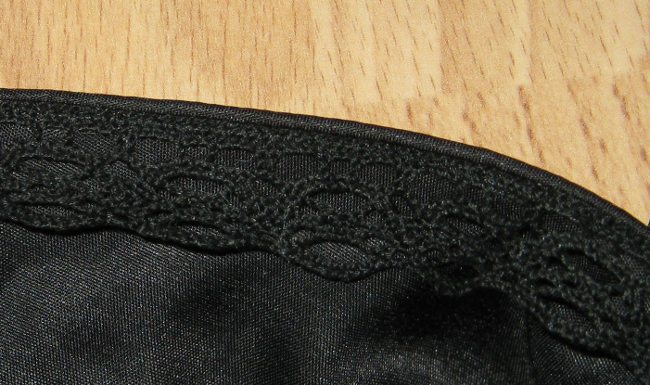
Danach sah dann die Schulternaht so aus und einige andere Nähte waren nicht besser. Der Stoff war einfach ausgefranst, das war mir so mit Venezia noch nie passiert. Ich habe dann zuerst überlegt, über die ausgefransten Säume von Hand Satinband drüber zu nähen, denn Futter raustrennen und neu reinnähen ist wirklich nichts, auf das ich so richtig Lust habe.

The picture above shows what the shoulder seam looked like. And some other seams didn’t look much better. The fabric came off. That had never happened to me with Venezia lining. First I’d thought to sew ribbons by hand over the dammaged seams. Because taking out the lining and sewing in a new one is not one of my favorite things to do.

Futer im RückenteilAber dann sah ich das Rückenteile… der Futterstoff ist vom Schlitz an, wo er eingeschnitten war, fast bis zur Schulter hoch eingerissen. (Der Einschnitt war natürlich gesichert gewesen, aber vermutlich haben sich meine Handstiche am Schlitzbesatz gelöst und die Waschmaschine hat den Rest erledigt.)

But then I saw that the back lining is ripped from the vent nearly up to the height of the shoulder blade. (Of course I had secured that cut and the snips into the seam allowance. But I looks as if the hand stitches on top of the vent had come loose and the movements of the washing machine did the rest.)

Also habe ich reumütig ein paar Meter Venezia gekauft und werde in den saueren Apfel beißen und ein neues Futter nähen. Die Nähte werde ich mal lieber noch zusäztlich absteppen…

So ruefully I went, bought some meters of Venezia lining and I will make a new lining. And just in case all seams will be top stitched…

Bennie Brokatbär

Bennie Brocade Bear

Bennie BrokatbärIch fürchte, mit hat es gepackt. Rudi hat einen Cousin bekommen, Bennie, den Bären. Die Vorderseite ist ein brokatartiger Dekostoff, der ihm ein eher edles Aussehen gibt.

I think a bug hit me… here’s Rudis posh cousin, Bennie the Bear. His front is made from a brocade like homedec fabric, which gives him a more posh impression.

Die Anleitung ist wieder aus dem Buch von Aranzi Aronzo. Das Gesicht habe ich diesmal vor dem Nähen der Teile schon gemacht, dadurch konnte ich größtenteils die Nähmaschine verwenden und die Knöpfe waren auch einfacher festzunähen. Die Nahtzugabe habe ich etwa einen Milimeter breiter gemacht und an allen Einschnitten gleich mit Fray Check gearbeitet. Das hat schon besser funktioniert. Nur die Wendeöffnung sollte ich bei dem Stoff besser versäubern, da ist einfach zu viel Belastung drauf, spätestens beim Stopfen franst sie doch arg aus. Ist er halt auf der einen Seite etwas schlanker…

Again I’ve used a pattern from the Aranzi Aronzo. I’ve made the face first, so I could use my sewing machine for most parts of it and sewing on the buttons for noose and eyes was easier. I’ve used about 1mm more seam allowance and it seems this was enough. (Plus a bit of Fray Check on the spots where the seam allowance gets clipped.) Only the opening for turning and stuffing would have needed some zigzag stitches before. After stuffing most of the seam allowance was lost there, Fray Check alone was not enough. So one leg is a bit slimmer than the other…