Grannie-Update 2013

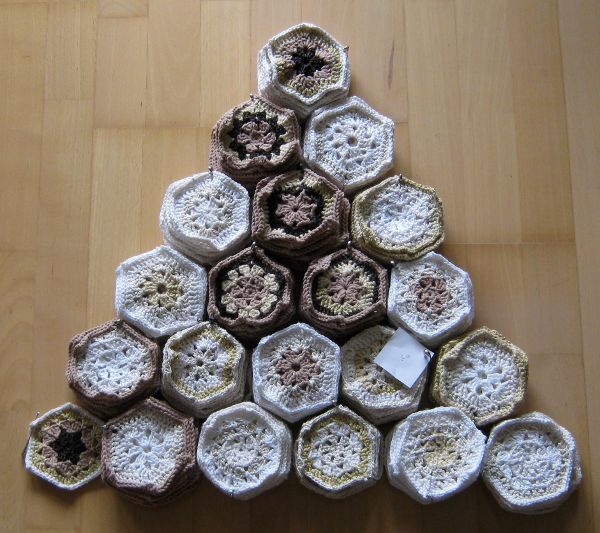
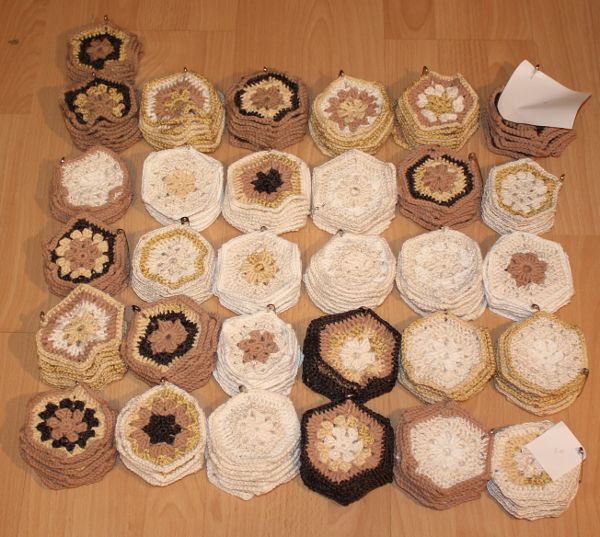
Das Jahresupdate meines aktuellen Grannie-Stands will ich euch aber auch nicht vorenthalten. Ich habe alle wieder ausgepackt und festgestellt, daß es inzwischen 301 sind! Dreiviertel der Häkelarbeit ist also erledigt.

Of course there is the 2013 update of my grannie crochet project. I unpacked all I have for the photo and it’S 301 now! So I have 3/4 of the intended number.

(Mindestens. Denn ich habe jetzt über die Kleinanzeigen auf Hobbyschneiderin24 noch zwei Sorten Garn gekauft. Und ich denke, wenn ich dann so weit aufgebraucht habe, daß wieder nur noch drei Farben übrig sind, dann höre ich auf und so groß wie sie wird, wird sie dann halt. Ansonsten…. wenn ich im aktuellen Tempo weiterhäkle wäre ich April 2015 fertig.)

(At least 3/4. Because I just purchased some more yarn via the market of hobbyschneiderin24. And I think when all that is used up down to only 3 remaining colors I will stop crocheting and the blanket will be the size for which I have enough hexagons then. Should I do all 400 the prognostics say I would be finished april 2015.)

Und die Himbeermarmelade gleich noch hinterher…

And the raspberry confiture also…

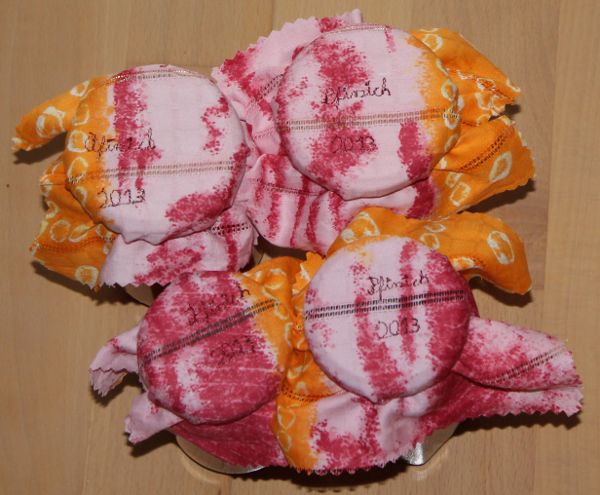
Und nur wenige Tage später, habe ich es dann auch geschafft, die Himbeermarmelade zu versorgen. (Tja, mehr war dieses Jahr nicht…)

And only a few days later I managed to finish the raspberry confiture also. (Well, that was all we had this year…)

Die Stickerei kann man auf dem Stoff nicht wirklich gut lesen, aber es geht ja hauptsächlich darum, die verschiedenen Sorten und Jahrgänge im Lager im Keller auf einen Blick gut unterscheiden zu können. Und dazu ist der Stoff gut.

The embroidery isn’t really well visible on the fabric, but the main purpose is that you can see at a glance which kind of confiture and from which year it is when it is stored in the cellar. And that the fabric will do.

Ich hätte ja lieber was mit rot genommen (blau nahm ich bislang eher für die Brombeermarmelade), aber offensichtlich habe ich in den letzten Jahren nur noch blau genäht, deswegen gibt es keine roten Rest.

I would have preferred to take something red (because usually I took blue for the blackberry confiture), but seems I did only sew blue in the last years, so there are no red remnants left.

(Ja, ich weiß, ein völlig unweihnachtliches Thema… aber bis zu nächsten Sommer wollte ich es dann auch nicht liegen lassen.)

(Yes, I know, the topic is not at all Christmay, New Year or even winter related… but I didn’t want to keep it back until next summer.)

Pfirsichkonfitüre im Winter?

Peach Confiture in Winter?

Nein, natürlich koche ich nicht im Winter Pfirsichmarmelade. Die Pfirsiche hatten wir aus dem Sommerurlaub mitgebracht (eine ganze Steige aus Südfrankreich) und ich hatte sie auch damals brav verarbeitet.

No, of course I did not make peach confiture in winter. When returning from our summer holiday we had brought a batch of peaches from southern France and I made the confiture right away then.

Nur hatte ich dann tatsächlich keine Gelegenheit, die „Kappen“ zu nähen bzw. zu sticken. Zuerst waren die Stoffreste nicht zugänglich und danach waren ständig dringendere Projekte.

But then I never made it to sew/embroider the jar covers. First I couldn’t access my remnants and after that there were always more urgent project to do.

Aber jetzt ist das endlich erledigt und ich kann das gleiche für die Himbeermarlemade machen…

But now it is finally done and I can do the same for the raspberry confiture…

Das Koriandergeheimnis

The Secret of Coriander

KorianderGarten ist ja nicht so meine Kernkompetenz, aber vielleicht ist hier jemand, der da mehr Ahnung hat?

Gardening is not something I know a lot about, so maybe one of you knows more?

Ich benutze beim Kochen gerne mal das eine oder andere Korianderblättchen (das grüne Zeug, das so ähnlich wie Petersilie aussieht, aber anders schmeckt). Da der auf unserem Wochenmarkt nicht so leicht zu bekommen ist, kaufe ich eine Pflanze. Die hat auch schöne, buschige grüne Blätter. Doch schon nach kurzer Zeit, drei bis maximal zehn Tage, werden die dicken grünen Blätter hart und mager und die Pflanze bildet fleißig fette Samenkapseln. Die ich aber gar nicht will. Dann schmeiße ich die Pflanze weg und kaufe die nächste, mit der sich das Spiel wiederholt. Hat jemand eine Ahnung, was ich tun kann, ob den Koriander länger benutzbar zu halten?

In my cooking I like to use coriander leaves from time to time. Since they are not always available at my grocery market I am buying a plant. The plant normally has the typical soft and wide leaves (similar to parsly, only a different taste). But then, after a few days (typically 3 – 10 if I’m lucky) the leaves transform into something thin and hard and a lot of round „fruits“ form. Then I am discarding the plant and buy a new one. And so on… Any idea why this is so and (even more interesting) what I can do to keep the „soft leaves“ status for longer?

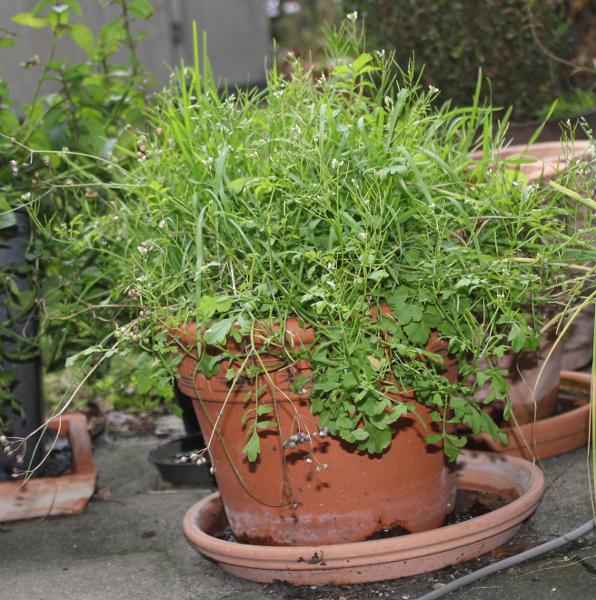
Und die zweite Frage: Was ist in dem Topf auf dem Bild oben passiert? Ich habe den Koriander drin gelassen, weil es für eine frische Pflanze eh zu spät im Jahr ist und dieser kleine Topf entwickelte sich in kurzer Zeit zur „grünen Hölle“ mit allen möglichen Gräsern. Keine Ahnung was…. macht Koriander den Boden fruchtbarer? (Das Bild ist von Mitte November, also als es schon gut kalt war.)

And second question: What happened to my flower pot on the picture above? Since it was already to cold for planting a new one I just left the coriander plant in the pot where it developped in short time to a kind of mini-jungle. Out of I don’t know which plants…. is coriander a kind of fertilizer to the soil? (The picture was taken mid november when it was already quite cold.)

Und die zweite Häkelnadel ist „aufgebraucht“…

„Used Up“ the Second Hook…

Der Herbst scheint keine gute Jahreszeit für Häkelnadeln zu sein.

Abgegriffene HäkelnadelAutumn doesn’t seem to be a good time for crochet hooks .

Dieses Jahr hat der Griff der Prym Häkelnadel den Geist aufgegeben. Nach weniger als zwei Jahren und etwa der Hälfte von 276 Hexagons.

This year it was the handle of the Prym crochet hooks that „gave in“. After less than two years and about half of 276 hexagons.

Soft Feel Lackierung ist halt nicht wirklich was für langlebige Produkte. Besonders nicht für solche, die wirklich viel angefasst werden. Zum Glück, kann man sie trotzdem noch benutzen und muß nicht ausgetauscht werden.

Soft feel finish is not really good for products that are supposed to last long. Especially not for those that get a lot of touch and handling. Luckily I can still use it and do not have to replace it.

Es geht auf Weihnachten…

Christmas is Coming Closer…

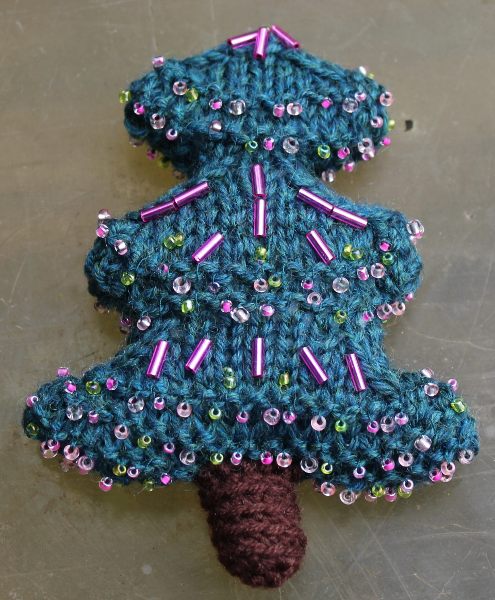
Minibaum… was nutzloses Stricken geradezu herausfordert.

… so a great time for completly useless knitting.

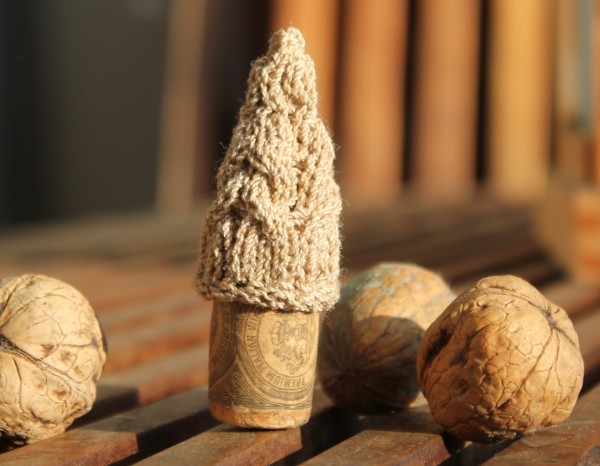
Von meinen Spitzenhandschuhen (äh… habe ich die schon gezeigt?) waren immer noch einige Meter übrig. Daher gibt es ein Winzbäumchen auf einem Korken.

After my lace mits (did I show them…?) some meters of yarn were left. So I made a tiny tree which sits on a cork.

Gefunden habe ich die Anleitung wie oft über ravelry und es ist Pint Sized Pines in a Cork Forest von Julie Tarsha, das Garn ist „Dream“ von Tahki Yarns. Leider hat es nicht für einen weiteren Baum gereicht, ein Wald wird das also nicht.

I’ve found the pattern via ravelry and it’s Pint Sized Pines in a Cork Forest by Julie Tarsha. The yarn is „Dream“ by Tahki Yarns. What is left now isn’t enough for another tree. I wont have a forest.

Jetzt schon für Weihnachten stricken…

Start Knitting for Christmas now…

gestrickter BaumDer Sommer ist vorbei, Weihnachten steht quasi vor der Tür…

Summer is over, Christmas is nearly there…

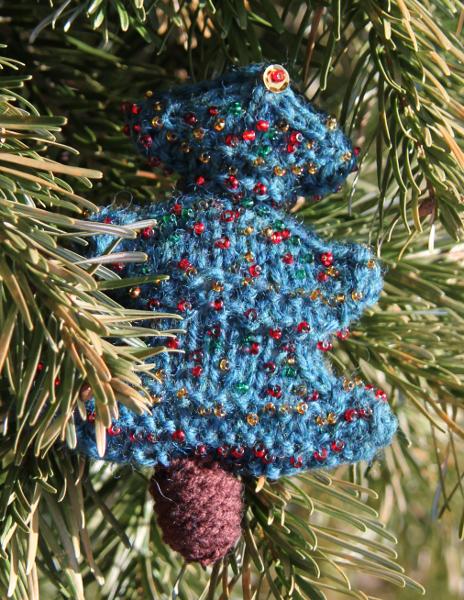
Und ich hatte da noch dunkelgrüne sowie braune Wollreste, Füllwatte sowie allerhand Perlen und Pailletten.

And I had some dark green and brown wool, stuffing, and some beads and sequins.

Gestrickter WeihnachtsbaumEin prima Resteprojekt, man braucht weniger als 20m von der grünen Wolle und zwei Stricknadeln. Die sollten etwas kleiner sein, als man das normalerweise machen würde, dann das Gestrick soll recht dicht sein.

It is nice to use up some remnants, you need less than 20 m of the green wool and two knitting needles. Size a little smaller than what you would normally choose, because you want a dense gauge.

Der Stamm wird dann mit knapp zwei Metern brauner Wolle gehäkelt.

The trunk is crocheted, with less than 2m of brown wool.

StrickbaumPerlen und Pailletten sind aus meinem Chaoshaufen, aufgenäht mit AlterfilS 120, den ich zufällig in genau der passenden Farbe da hatte. 🙂

Beads and sequins were what I was having in my drawer. I used my my trusted AlterfilS 120 for sewing, I had some in exactely the matching color. 🙂

Falls das jemand nachmachen mag, findet er die Anleitung hier.

If you want to try yourself here are the instructions.

Eine Tasche voller Grannies….

A Bag Full of Grannies…

Tasche mit Häkelteilen… sind genau 239 Stück.

… makes 239 hexagons.

Also es wären auch 240 reingegangen, aber von einer Farbkombination gibt es nur neun, weil dann das Garn ausging.

240 would have been possible also, but for one color combination I have only nine patches because I ran out of yarn.

Aber jetzt ist diese so praktische Tasche leider voll und ich muß mir überlegen, wo ich den Rest aufbewahre. Wenn ich auch noch anfangen, „passgenaue“ Einkaufsbeutel zu nähen, komme ich ja zu gar nichts sinnvollem mehr…

But now this super useful bag is full and I have to see what I am going to use for the rest. Theoretically I could sew on, but if I start sewing shopping bags also I’ll never get anything of my needed projects finished…

Das ging schief…

That went wrong…

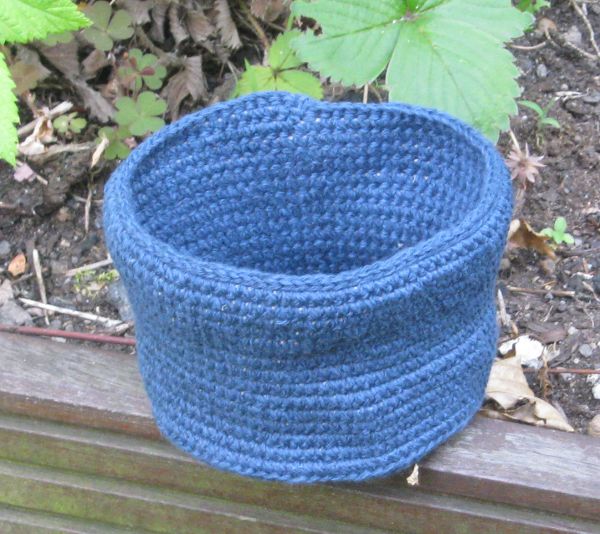
schiefer Häkelkorb… im wahrsten Sinne des Wortes.

… as you can see.

Ich hatte da noch einen Rest katia „Linen“ und wollte schon lange mal das mit dem Schnurhäkeln ausprobieren. Zumal wir außerdem ein neues Brotkörbchen brauchen konnten. Unseres ist relativ klein und länglich, so daß es in der Küche genau seinen Platz findet. Und fällt so gut wie auseinander. Aber in dem Format gibt es so was nicht zu kaufen. Also dachte ich an häkeln, dann wäre es waschbar.

I had some katia „Linen“ left. And I had wanted to try clothesline crochet for quite a while. I thought I could make a new bread basket for us. Ours was falling apart and had a quite longish shape which made it fit exactely into a free spot in the kitchen. And we had not been able to get a replacement in the same size. So crocheting one soundend good to me, also it would be washable then.

Aber bevor man so was angeht, kann man die Technik ja erst mal testen. Als dann Bärbel letzten Sommer ein solches Projekt vorstellte, wurde ich wieder dran erinnert. Und dann dauerte es auch nur fast ein Jahr, bis ich dazu kam, es auszuprobieren…

But before using a new technique on a bigger project I prefer testing. Bärbel’s project from last summer remindend me of my plans and it took only nearly a year until I’ve found the time to start….

Benutzt habe ich also das Baumwoll-Leinen Garn, eine 3mm Häkelnadel und billige Paketschnur. Zunächst mal das Ergebnis: Siehe Bild, das ist ganz offensichtlich nicht meine Technik.

So I used the cotton linen yarn, a 3mm crochet hook and cheap string. For the result: Look at the picture. This is not my technique.

Das Häkeln selber war auch sehr „ergiebig“, ich denke fast jeder Zentimeter des Garnes wurde mindestens zwei Mal gehäkelt: Mit „sliding loop“ anschlagen, feste Maschen, zusammenziehen, auftrennen. Paketschnur anders wickeln noch mal bis Runde zwei. Auftrennen bis Runde 1. Runde 2-5 häkeln. Auftrennen. Runde 3-6  Häkeln. Auftrennen. Runde 4-8 häkeln. Auftrennen. Runde 6-10 häkeln. Dann hatte ich endlich einen Boden der halbwegs flach war. (Ich kenne die Grundregel, wie man zunehmen muß, damit es flach wird. Aber entweder stimmt die nicht, paßt nicht, wenn man um Schnur herumhäkelt oder meine Maschen haben die falschen Proportionen…)

On the other hand I got the maximum of crochet fun out of the yarn, because I think nearly every centimeter of yarn was crocheted at least twice. Starting with a slinding loop, crocheting 1st round. Ripping it all and „looping“ the string differently. Crocheting round 1 and 2. Ripping. Crocheting round 2-5, ripping, corcheting round 3-6, ripping, crocheting round 4-8, ripping, crocheting round 6-10. Then I finally had a bottom that was mostly flat. (I know the basic rule how to add stitches to get a flat round object. But either they do not apply to to clothesline crochet, do not apply or do not apply to my stitches.)

Danach sollte man meinen, daß es einfach nur gerade hoch geht. Dabei habe ich die Schnur immer etwas angezogen. Am Ende kurvte mein Körbchen gewaltig nach innen. Also habe ich es bis Reihe 5 aufgetrennt und das ganze mit weniger Zug auf der Schnur neu gehäkelt. Ergebnis: Siehe oben. Sehr „free form“ nur nicht das was ich wollte.

Then you should think that crocheting straight up shouldn’t be a problem. I pulled the string a bit while crocheting to keep it taut. Then the basket curved more and more inward. In the end I ripped it down to round 5 and did it again. This time I kept the string less firm. Result: see picture above. Very „free form“  but not what I wanted at all.

Aber gut, dafür teste ich ja…. das wird kein Brotkorb. Was glücklicherweise nicht mehr nötig ist, denn vor wenigen Tagen kam ein neuer… ich habe da eine Freundin, die sehr geschickt mit Peddigrohr ist und paßgenau einen neuen geflochten hat. 🙂

Well, that is why I am testing… this is never be a bread basket. Which isn’t necessary any longer, because some days ago I got a new one… A friend of mine is very good im basekt weaving and made a new one that fits the spot. 🙂
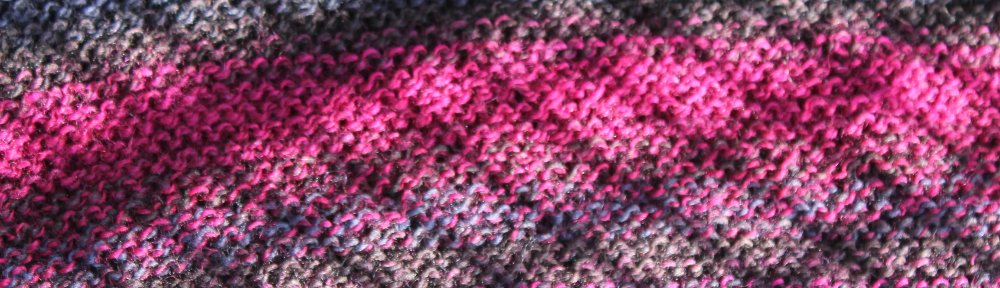
Halbzeit!

Halfway through!

Im Moment geht es zügig, ich habe tatsächlich 200 Grannies gehäkelt, sprich die Hälfte ist geschafft!

At the moment there is good progress, I’ve crocheted 200 grannies. So I’ve done half of what I will need!

Sollte ich das Tempo beibehalten, wäre ich Juni 2014 mit allen Hexagons fertig.

If I manage to keep up that speed I would have done all hexagons in June 2014.